Do I Need an Accountant for My Small Business in Ireland?
Short answer: not always legally required, but almost always worth it.
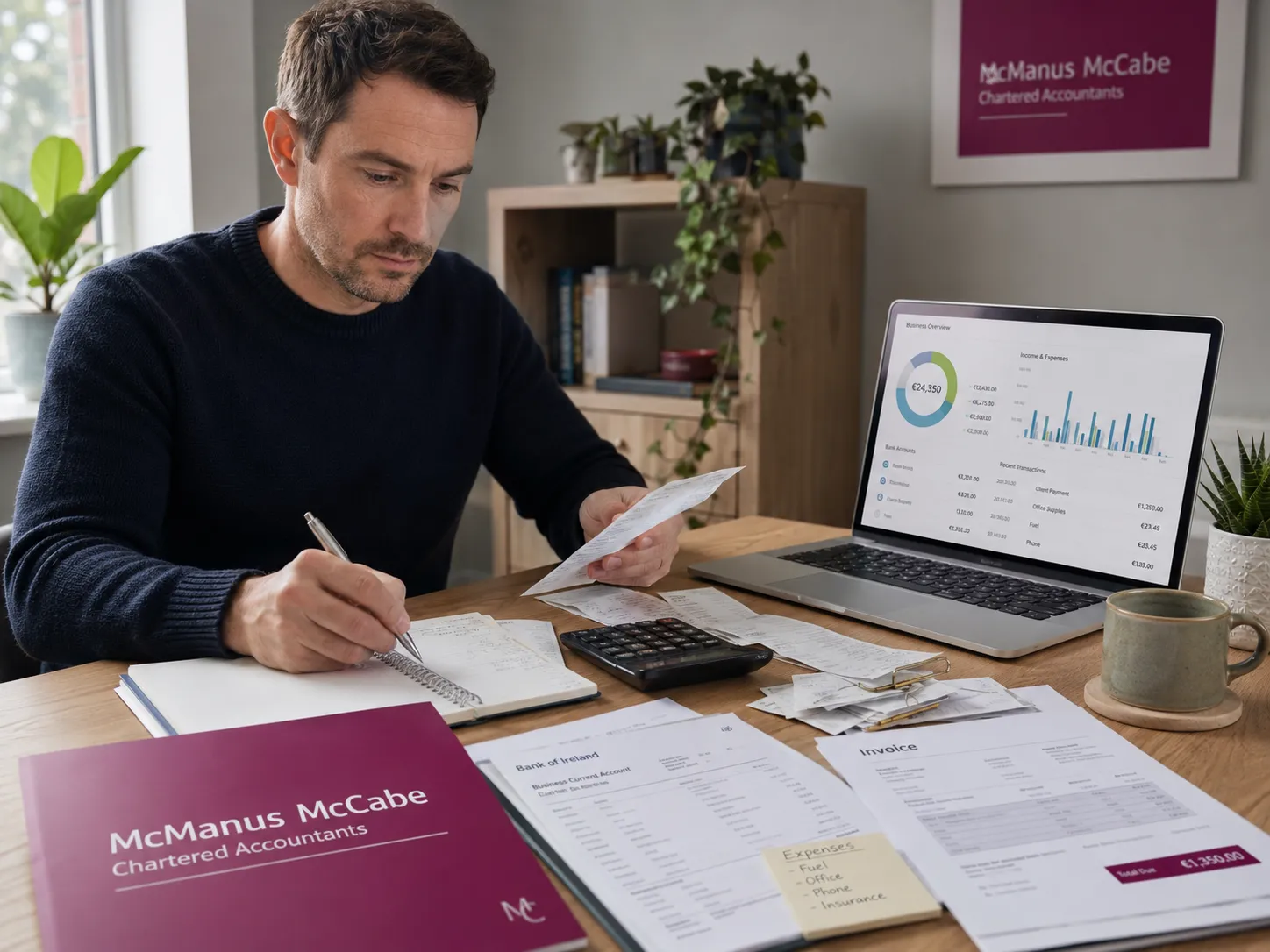
There is no Irish law that requires a sole trader to use an accountant. You can register for income tax, file your own Form 11, and pay your own preliminary tax without any professional involvement. Revenue provides guidance, and ROS is available to all taxpayers.
But the question of whether you are required to use an accountant is different from whether you should. Here is an honest breakdown.
When You Do Not Legally Need an Accountant
| Business Situation | What You Can Do Yourself |
|---|---|
| PAYE employee with no other income | File a Revenue MyAccount claim for missed credits and reliefs. No Form 11 required. |
| Sole trader, straightforward income, clean records | File Form 11 via ROS. Revenue provides guidance. No legal requirement to use an accountant. |
| Small limited company within audit exemption | No audit required, and iXBRL tagging is currently compulsory only for larger companies. But annual accounts must still comply with Companies Act 2014 format - this is not straightforward without professional software. |
When You Should Almost Certainly Use an Accountant
You Have a Limited Company
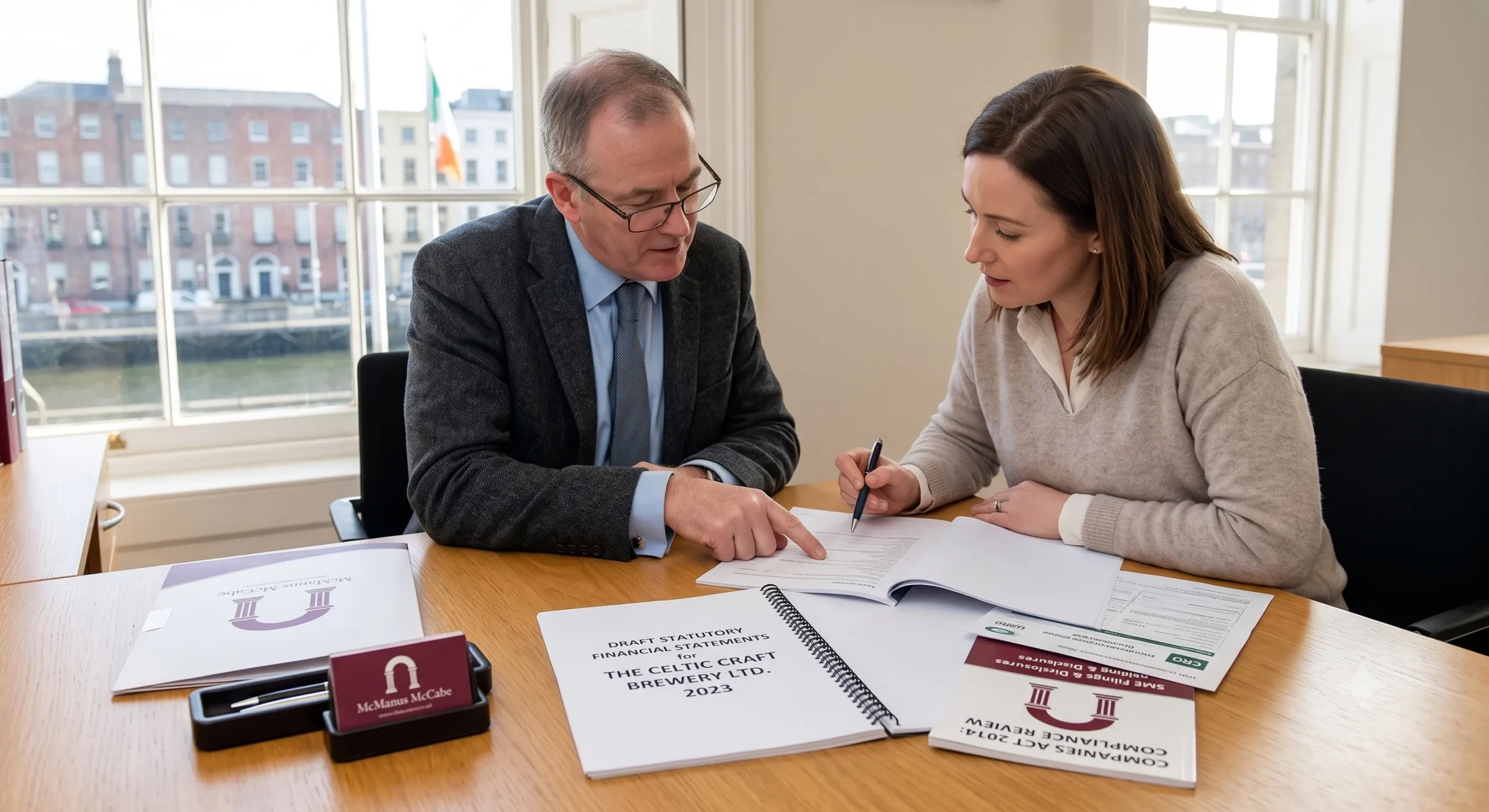
Running a limited company without an accountant is technically possible but practically difficult. The obligations include:
- 1Annual statutory financial statements (profit and loss, balance sheet, notes) in Companies Act 2014 format
- 2iXBRL tagging of accounts for Revenue - currently compulsory only for larger companies filing CT1, though this may extend more widely over time
- 3CT1 corporation tax return - complex with multiple schedules for different income types and reliefs
- 4Director income tax returns (Form 11) - director loans, benefits-in-kind, and close company rules create complexity
- 5CRO annual return (B1) within 56 days of Annual Return Date - late filing triggers loss of audit exemption for 2 years
For companies within scope of the iXBRL tagging requirement, this typically requires professional accounting software that is not cost-effective for a small business to purchase independently. The practical reality is that almost all Irish limited companies use an accountant. Many startups and SMEs choose dedicated accounting support for startups and small businesses to handle these ongoing financial responsibilities.
You Are VAT-Registered
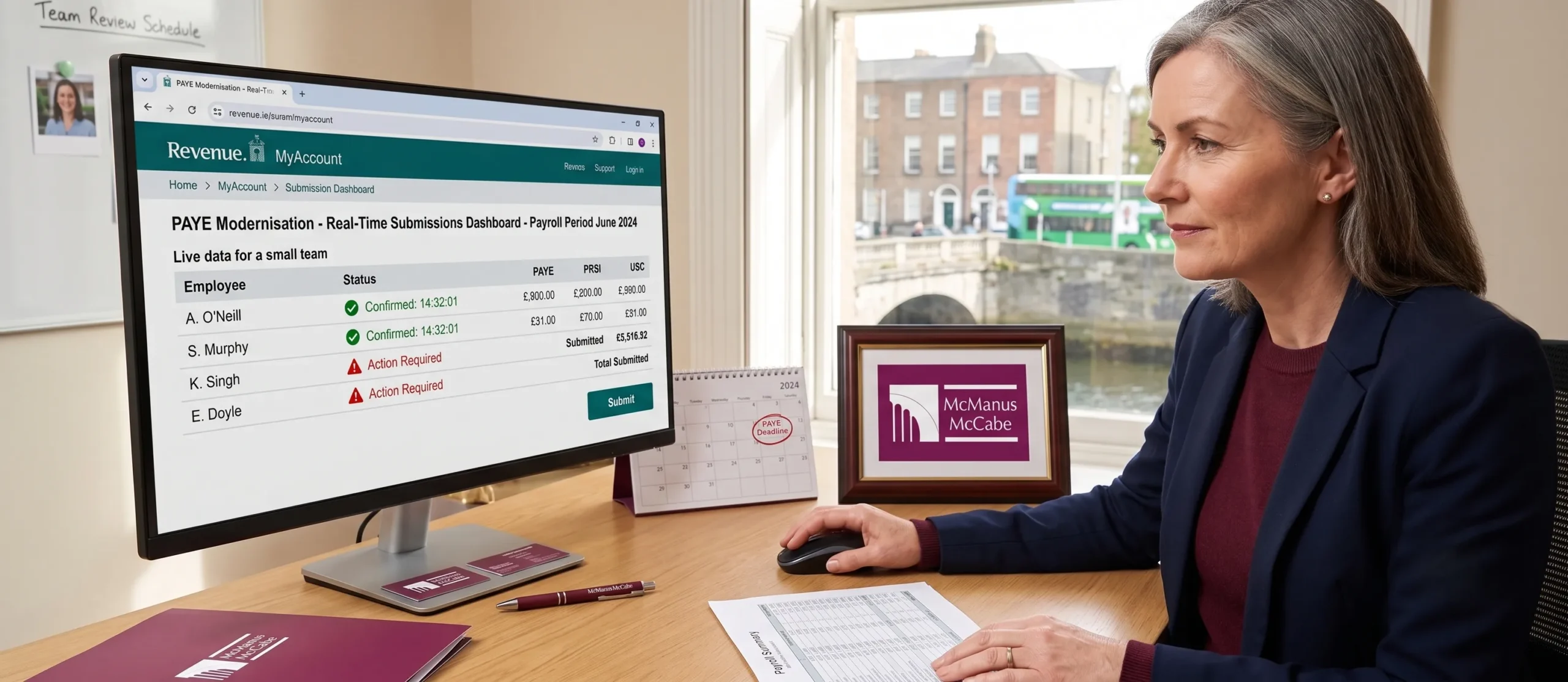
VAT in Ireland involves bi-monthly returns, the two-thirds rule for capital goods, the VAT cash basis election, construction services reverse charge, and EU intra-community transactions (VIES and Intrastat). For most businesses, VAT returns prepared without professional support carry a material risk of error - particularly on mixed-supply situations, partial exemption, and the treatment of expenses with mixed business and personal use.
Your Income Is Complex
Multiple income sources, rental income, foreign income, share options, or a mix of employment and self-employment are precisely the situations where Revenue expects a Form 11 and where errors or omissions are most likely. A Chartered Accountant will ensure all income is correctly declared, all deductions are claimed, and the return is filed correctly.
You Have Received Revenue Contact
If you have received a Revenue letter - any level of compliance intervention - engage a Chartered Accountant before you respond. See our detailed guide: I Got a Revenue Compliance Intervention Letter: What Should I Do?
What Does an Accountant Actually Do For a Small Business?
Beyond filing returns, a good Chartered Accountant provides active management of your tax affairs:
- 1Year-round availability to answer tax questions as they arise
- 2Preliminary tax planning each autumn - ensuring you pay the right amount and not more
- 3Remuneration planning for company directors - salary vs dividend vs benefit optimisation
- 4VAT management - so errors do not accumulate
- 5CRO compliance - annual returns filed on time so audit exemption is maintained
- 6Revenue liaison - handling queries and correspondence on your behalf
Beyond compliance and tax support, growing businesses may also benefit from our business advisory services to improve cash flow, processes, strategy and overall performance.
Is an Accountant Worth the Cost?
For a straightforward sole trader with one income source and clean records, an accountant costs EUR800-EUR1,200 per year. In most cases, a qualified Chartered Accountant will identify deductions and reliefs that offset a significant portion of that fee. Pension contribution timing, home office deductions, vehicle expenses, flat-rate expenses, and R&D tax credits are commonly underclaimed.
For a limited company director, the annual compliance obligation is more complex. The cost of getting it wrong - Revenue interest, penalties, late filing fees, and loss of audit exemption - will almost always exceed the cost of professional management from the outset.
The decision is not really accountant vs no accountant. It is managed compliance vs unmanaged compliance. The unmanaged version has a variable and unpredictable cost. The managed version has a fixed and known cost.
Small business accounting and start-up services Dublin
Do I Need an Accountant for My Small Business in Ireland?