
I Got a Revenue Compliance Intervention Letter: What Should I Do?
First: do not reply directly to Revenue before speaking to a Chartered Accountant or tax consultant. How you respond - and what you do in the window before responding - can significantly affect the outcome.

A Revenue compliance intervention letter lands in your inbox or letterbox without warning. For most small business owners and company directors, it is the most alarming piece of post they receive. The natural instinct is to reply immediately and explain yourself. That instinct is wrong.
This guide explains what the letter means, what type of intervention you are dealing with, and the steps to take - in order.
Step 1: Identify Which Type of Letter You Have Received
Revenue contacts taxpayers in different ways depending on the type of intervention. The letter you have received falls into one of the following categories:
| Letter Type | What It Means | Urgency Level |
|---|---|---|
| Aspect Query | Revenue has a question about one specific item on your return. Not an audit. | Medium. Respond in writing within the timeframe given. Do not respond without advisor review. |
| Profile Interview Notice | Revenue wants to meet to review your overall tax affairs. Level 2 intervention. | High. A qualifying disclosure window may be open. Engage advisor immediately. |
| Audit Notification Letter | Formal audit notice. This opens the audit. A 14-day window to make a prompted qualifying disclosure typically applies. | Very High. Engage advisor before the deadline. Qualifying disclosure must be made before audit starts to reduce penalties. |
| Information Request / Third Party Notice | Revenue seeks documents or records, often as a preliminary step to further action. | High. Do not provide more than is requested. Engage advisor before responding. |
Step 2: Do Not Reply Before Engaging an Advisor
This is not a precaution. It is the most important practical step you can take.
Every response you provide to Revenue is on the record. If you make admissions, provide more information than requested, or fail to exercise your rights under the Code of Practice, you cannot take them back. A Chartered Accountant who has managed Revenue interventions will know what to say, how to say it, and equally importantly, what not to say.
If you have received an audit notification letter, the window to make a qualifying disclosure is typically 14 days from receipt of the letter (check the specific date in your letter). Making a qualifying disclosure before the audit commences will reduce the penalties applicable to any under-declarations identified. This window closes when the audit starts - not when it is convenient to engage an advisor.
Step 3: Understand What Revenue Already Knows
Revenue does not typically contact a taxpayer unless it already has some information suggesting a compliance issue. This information may have come from:
- Third-party data - banks, landlords, employers, Revenue from another country (under tax information exchange agreements)
- Your own returns - patterns in your returns that Revenue risk-profiling systems have flagged
- An informant - Revenue does accept and act on information from third parties
- A sector or industry focus campaign
- Follow-on from a previous compliance interaction
Understanding what Revenue may already know helps your advisor frame the response and assess whether a qualifying disclosure is appropriate. Your advisor will review your returns for the relevant period before advising you.
Step 4: Gather Your Records
If you are facing a Revenue compliance intervention , you will need to provide access to your books and records for the period under review. Revenue can require production of:
- Bank statements (business and personal, where relevant)
- Invoices issued and received
- Payroll records
- VAT records and workings
- Contracts, agreements, and correspondence
- Accounts and supporting schedules
Your Chartered Accountant will advise which records to gather and review them before they are provided to Revenue, to identify any issues and ensure the records are presented in a way that is clear and complete.
Step 5: Consider Whether a Qualifying Disclosure Is Appropriate
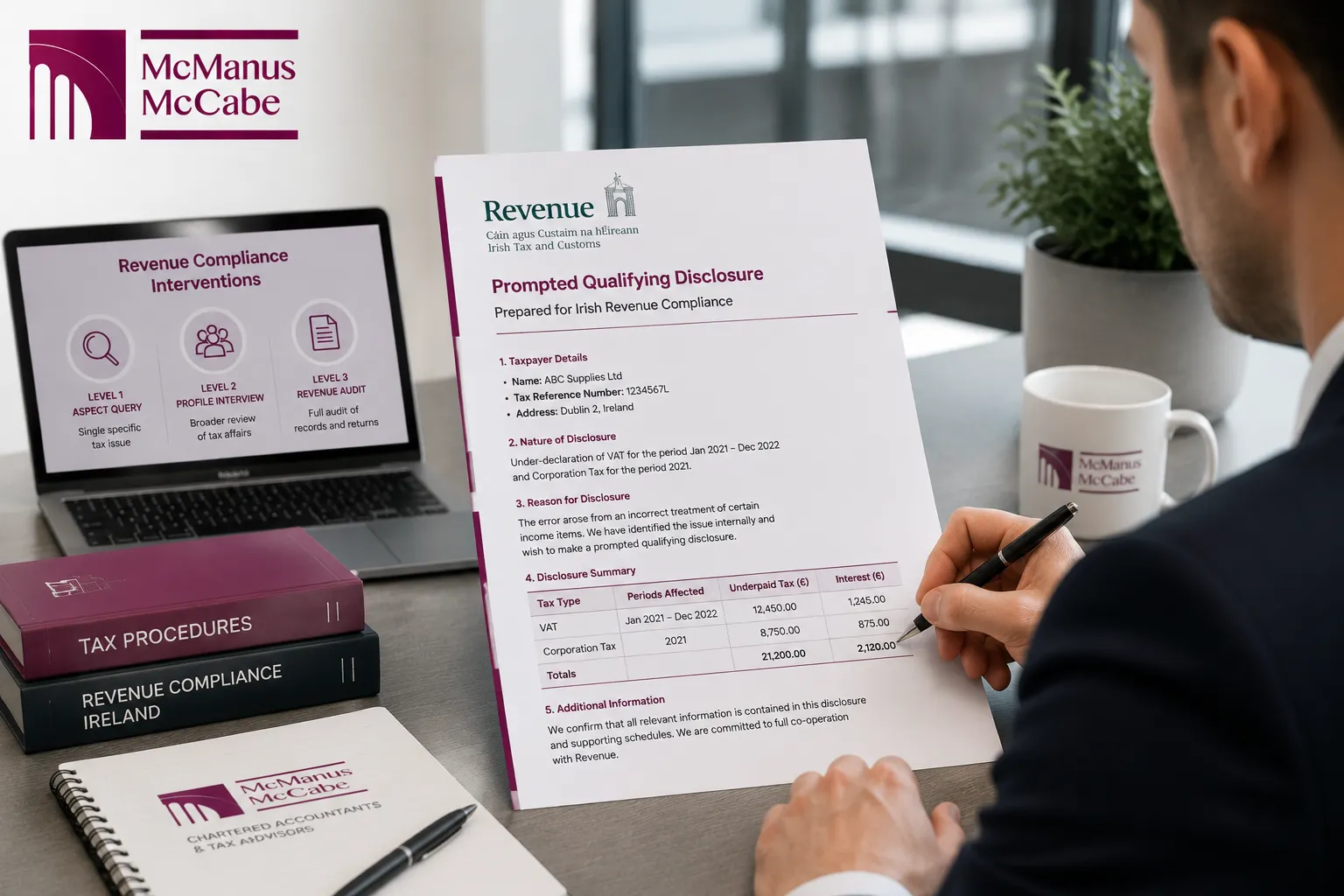
A qualifying disclosure can dramatically reduce the penalties attached to any under-declarations found in a Revenue audit. The decision to make a qualifying disclosure - and the timing of it - is one of the most consequential decisions in a Revenue intervention.
An unprompted qualifying disclosure (made before any Revenue contact) achieves the minimum penalty rates. If you are reading this guide because you have already received a Revenue letter, unprompted disclosure is no longer possible for the matters Revenue has flagged. However, a prompted qualifying disclosure (made after the audit notification but before the audit commences) still significantly reduces penalties compared to having Revenue identify the under-declaration themselves.
McManus McCabe will review your returns for the relevant period, identify any potential under-declarations, calculate the tax and interest due, and advise on whether a qualifying disclosure is appropriate. We then prepare and file the disclosure with Revenue.
Step 6: Attend the Audit or Compliance Intervention with Representation
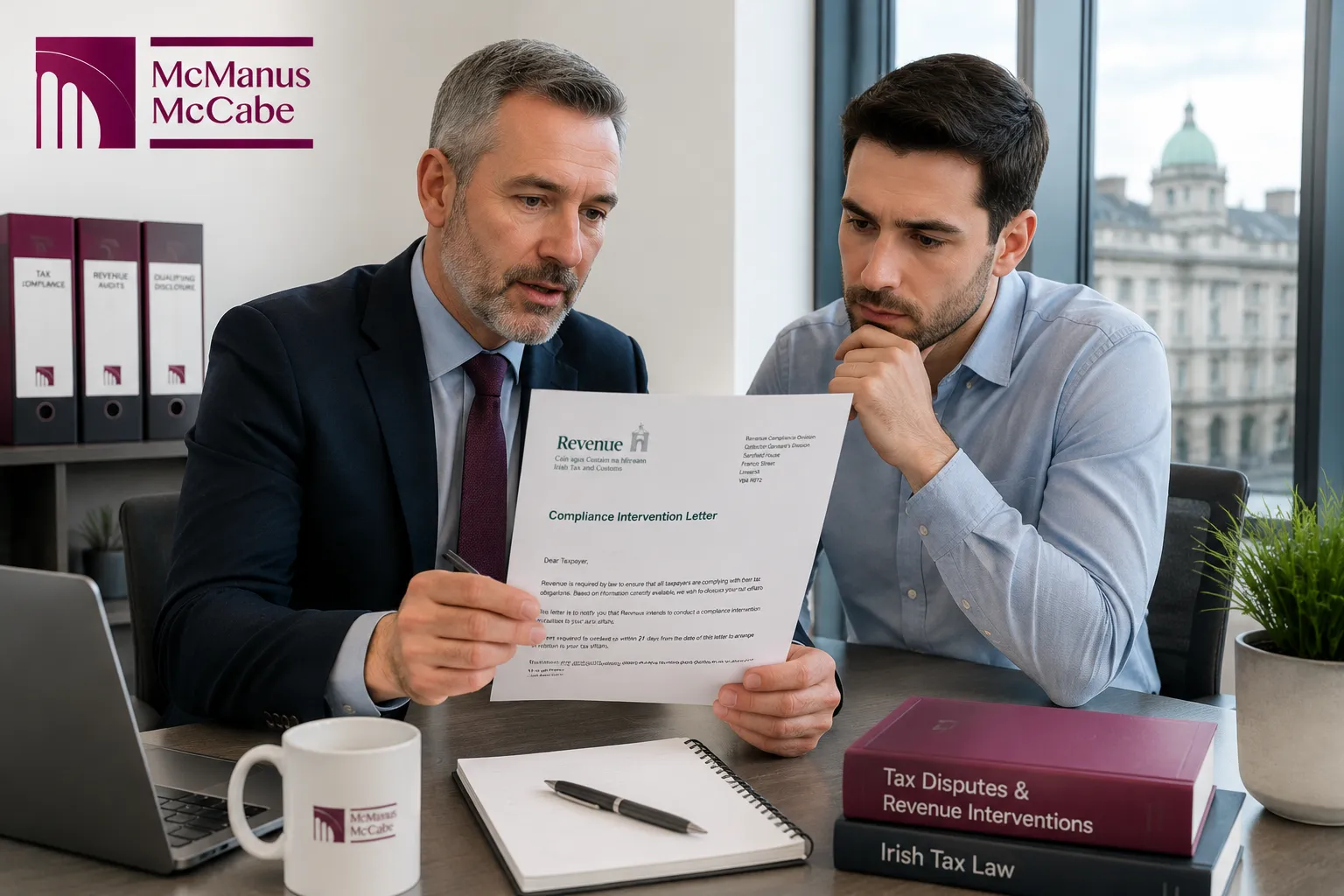
You are entitled to have a professional representative present at any Revenue audit meeting or profile interview. You should exercise this right.
McManus McCabe attends Revenue audits and compliance interventions on behalf of clients, manages all representations to the Revenue auditor, and ensures the process is conducted in accordance with the Code of Practice. This matters because Revenue auditors are experienced professionals. Going in without qualified representation is a significant disadvantage.
What Happens After the Audit
At the conclusion of a Revenue audit, Revenue will issue its findings. The taxpayer has the right to respond before a formal assessment is raised. If there is a dispute about the audit findings, the taxpayer has the right to appeal to the Tax Appeals Commission (TAC).
Settlements are agreed between Revenue and the taxpayer (through their advisor). The settlement covers the additional tax due, interest, and any penalties. Where the settlement meets the publication threshold (tax element of EUR35,000 or more, penalty for deliberate behaviour) and no qualifying disclosure was made, the settlement will be published on the Tax Defaulters List.
Need help responding to Revenue?
McManus McCabe Chartered Accountants can review the letter, assess the disclosure position, and manage representation with Revenue.