Business Risk Management for Irish SMEs
Identify, assess and control the financial and operational risks to your business - before they become problems. Risk management is the disciplined process of identifying what could go wrong in your business, judging how serious and likely each risk is, and putting controls in place to prevent or reduce it. For an SME, done well, it is the difference between a shock that is survivable and one that is not.
Operational risks can disrupt normal business activities, making effective business continuity planning important for reducing disruption and maintaining essential operations.


Every business carries risk - financial, operational, regulatory, commercial. The successful ones are not the ones with no risk; they are the ones that see their risks coming and have controls in place. This page is about business and financial risk management for Irish SMEs - not abstract theory, but the practical work of protecting a real company.
The main risks an SME faces
'Risk management' is a broad term that can drift into abstraction. We keep it concrete and specific to your company - the risks that could actually hurt this business, and the controls that will actually reduce them - rather than a generic checklist.
How we help you manage risk
- Identify - work through your business with you to surface the real risks, financial and operational.
- Assess - rank each risk by likelihood and impact, so effort goes where it matters.
- Control - design practical controls: cash-flow discipline, credit control, segregation of duties, fraud prevention, continuity planning.
- Embed - capture it in a simple risk register and build review into your management routine.
- Review - revisit as the business and its environment change.
Because we are chartered accountants, our particular strength is financial risk and internal control - the areas where an outside, independent eye most often finds the gap that management is too close to see. This work sits naturally alongside our audit, compliance and governance services.
Internal controls and fraud prevention
A large share of SME risk comes down to internal control - who can authorise, who can pay, who reconciles, and whether any one person can do all three. Weak controls are the single most common enabler of fraud and error in small businesses. We review your controls and recommend practical, proportionate improvements that reduce risk without tying the business in red tape.
What it costs - and how we scope fees
We do not publish a single price because no two engagements are the same - the fee depends on the size and complexity of the business, the records available and the scope agreed.
After an initial consultation we issue a written proposal setting out exactly what is included, the timescale and the cost, so there are no surprises.
Where an engagement is likely to run in stages (for example an investigation or a multi-year succession), we scope and price each stage separately.

Frequently Asked Questions
What is business risk management?
The process of identifying the risks that could harm your business, assessing each for likelihood and impact, and putting controls in place to prevent or reduce them - usually captured in a risk register and reviewed regularly.Why does an SME need risk management?
Because a single unmanaged risk - a major bad debt, a fraud, the loss of a key customer or person - can threaten a small business's survival. Managing risk turns potential shocks into planned-for events.What does financial risk management cover?
Cash flow, credit and customer concentration, bad debts, fraud and error, and funding risk - plus the internal controls that keep them in check. As chartered accountants this is our core strength.How do you start?
With a risk review of your business to identify and rank the real risks, followed by a practical set of controls and a simple risk register. We scope this with a written proposal after an initial consultation.
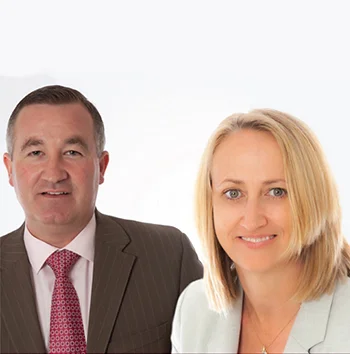
Talk to Adrian or Teresa
McManus McCabe is a partner-led chartered accountancy practice in Dublin. Every engagement is handled directly by Adrian McManus (FCCA) or Teresa McCabe (FCA, Dip. Tax) - not passed down a chain - and scoped with a clear proposal before any work begins, so you know what it costs, what you get and how long it takes.
Book a confidential, no-obligation consultation to talk through your situation and receive a written quotation.